
Trisoma®
Myofascial Release Therapy
 ...is a group of manual massage techniques for releasing bonds between
fascia
and integument, muscles, tendons, ligaments and bones, in order to
reduce pain and increase mobility, fluidity and range of motion.
Light to strong force may be used with various techniques, frequently beginning distally of where symptoms are prevalent,
since problems may be elsewhere from the pain and stiffness. Methods may include sustained or effleuraging shear, tension (pulling), compression, skin rolling, and barefoot deep tissue, sometimes coupled with active or passive joint motion, with or without stretching.
...is a group of manual massage techniques for releasing bonds between
fascia
and integument, muscles, tendons, ligaments and bones, in order to
reduce pain and increase mobility, fluidity and range of motion.
Light to strong force may be used with various techniques, frequently beginning distally of where symptoms are prevalent,
since problems may be elsewhere from the pain and stiffness. Methods may include sustained or effleuraging shear, tension (pulling), compression, skin rolling, and barefoot deep tissue, sometimes coupled with active or passive joint motion, with or without stretching.
Myofascial release is used by many massage and physical therapists,
...and exists in many different forms. Most clinical therapists use direct pressure methods, such as Rolfing®. Lighter or slower techniques, such as Bowen Technique, use more time to release the layers. Paul trained under John Harris, David Dallmeyer, P.T. and Lamar Bush, and employs various techniques depending on the specifics of the client.
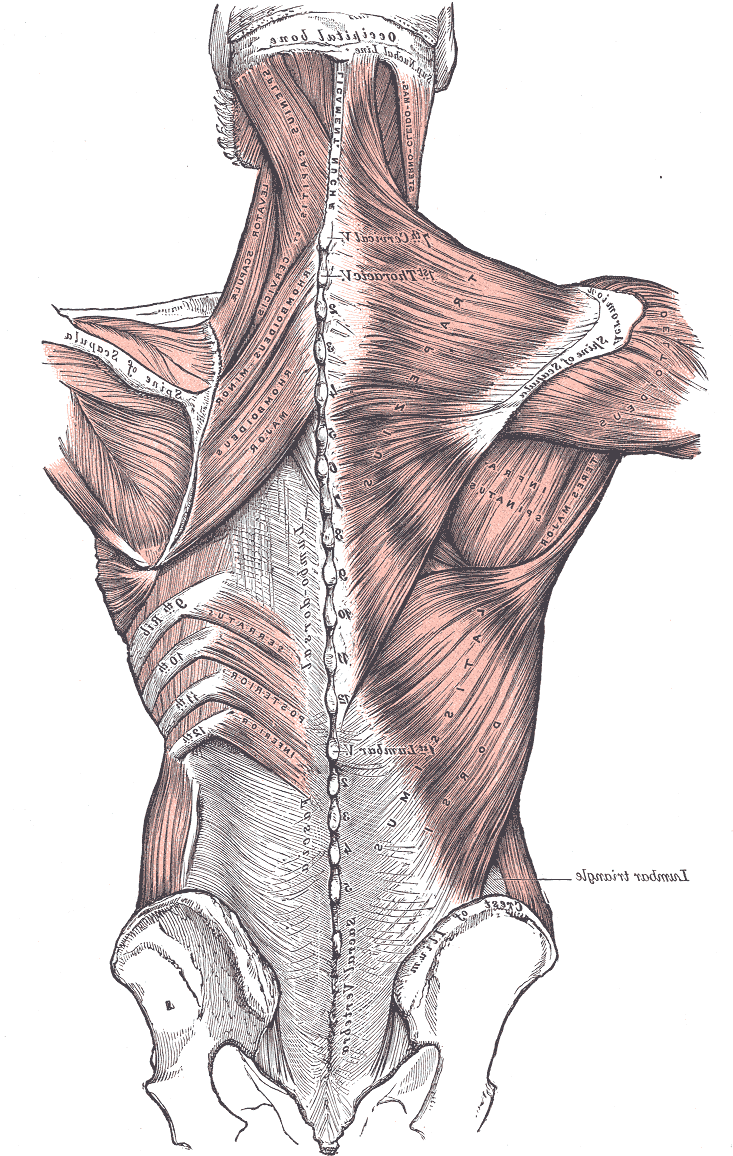
Restricted fascia
...is a common contributing cause of seemingly tight and painful muscles, restricted joint mobility and a host of other problems due to tension or pressure on organs, nerves and vessels. Because adhesions and stress in fascia are not obvious on x-rays, CAT scans, MRI's nor with electromyography, physicians have difficulty diagnosing fascial restrictions. The goal of myofascial release is to release fascial restrictions and allow the layers to move freely, thus allowing the muscles to shorten as well as to lengthen, as they should in a healthy human body.
Surprisingly, a muscle may appear tight due to the opposing muscle being restricted from shortening by fascial adhesions, such as a restricted psoas mimicking tight gluteal muscles. Although massage that affects muscles also affects fascia, the effects of myofascial massage specifically may be more potent.[4] The nervous system's response to physical manipulation of the surface or underlying tissues of the body and decrease in restrictions also causes reflexive and other effects including:
- increased blood and lymph flow
- slowed heart rate
- slowed respiration
- increased immune response
- muscle tonus reduced
- pain reduction
- stress reduction
- general relaxation
Fascia is fibrous tissue that bind muscles and organs
The main factors that induce fascial abnormalities are trauma, chronic strain, and immobility of fascial tissues.[1] Injuries, stress, overuse, dehydration, overbreathing, poor nutrition and poor posture contribute to restrictions in the layers due to bonding of fascia. In response to physical stress, fascia may reorganize itself and thicken and shorten along lines of tension.[2] This affects motion of the neck, back, arms, legs, feet and elsewhere.
Fascia can become more fibrotic when traumatized or overused,
and it tends to web after periods of immobility, causing collagen molecules to tether together, leading to fibrosis. When muscle tissue, fascia and other tissues are damaged, the body tends to quickly patch the area with scar tissue which does not necessarily match the original composition; it becomes less elastic, less vascularized, less innervated, less oriented and thus poorer in performance, and possibly numb or painful. When a muscle is stretched, its fascia is also lengthened. If the muscle's fascia is stuck to other layers of fascia, soft tissue, bone or other organs, tightness may be felt locally and in other areas, limiting muscle elongation, when muscle tightness may not be the actual problem. Myofascial stretching or release in one area of the body may be felt in, and may affect, other body areas. When one considers the many layers of broad tissue that the back has, it becomes clearer why myofascial issues can contribute to back trouble even when people do not feel overworked.
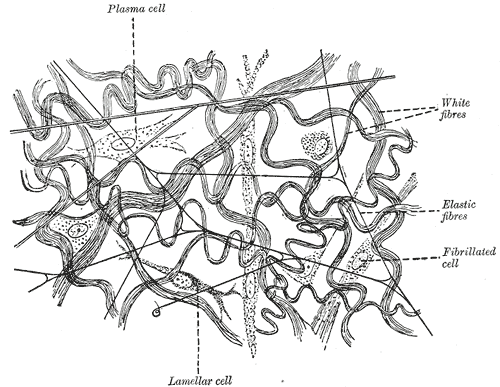 Fascia
covers all organs, including muscles, of the body, and has two types.
Superficial fascia
is fibroareolar tissue
and is found immediately beneath the integument over almost the entire surface of the body. It contains fat, and connects the skin with the deep fascia.
Deep fascia
is a dense, inelastic, parallel fibrous membrane, forming sheaths for individual muscles (epimysium) and internal organs and structures, and in some cases, such as intermuscular septa and tendons, affording them broad surfaces for attachment to aponeuroses or periosteum (bone).
Examples are Tensor fasciæ latæ and Glutæus maximus in the thigh, Palmaris longus in the hand and Biceps bracchii and Biceps femoris.
Targets of myofascial release include adhesions of superficial and deep fascia, integument, tendons, ligaments, retinacula, aponeuroses, bursae, bone, muscle and other organs.
Fascia
covers all organs, including muscles, of the body, and has two types.
Superficial fascia
is fibroareolar tissue
and is found immediately beneath the integument over almost the entire surface of the body. It contains fat, and connects the skin with the deep fascia.
Deep fascia
is a dense, inelastic, parallel fibrous membrane, forming sheaths for individual muscles (epimysium) and internal organs and structures, and in some cases, such as intermuscular septa and tendons, affording them broad surfaces for attachment to aponeuroses or periosteum (bone).
Examples are Tensor fasciæ latæ and Glutæus maximus in the thigh, Palmaris longus in the hand and Biceps bracchii and Biceps femoris.
Targets of myofascial release include adhesions of superficial and deep fascia, integument, tendons, ligaments, retinacula, aponeuroses, bursae, bone, muscle and other organs.
Myofascial Release separates the layers of fascia from one another and from muscle and periosteum, and it also increases the distance between the collagen fibers, allowing for increased hydration, nutrition and a decrease in capillary compression. Many people believe that lack of mobility is prima facie evidence of tight muscle strands. Trisoma believes that the muscle stretch reflex has an effect on the release of fascia. After myofascial release, many people, even highly mobile and flexible athletes, find that mobility may be improved by release of the fascia layers that can limit the extension and contraction of various muscles.
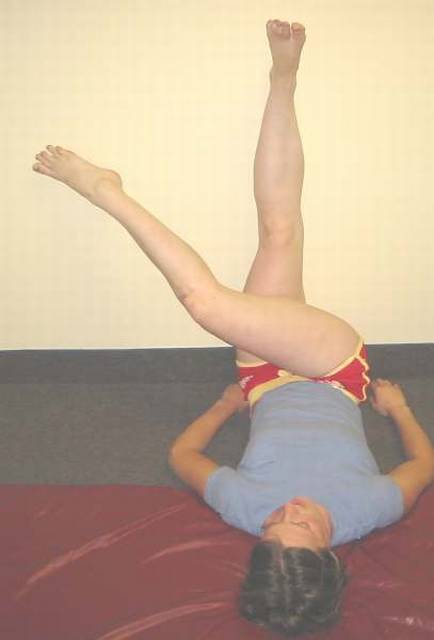
As with muscle contraction theories and muscles stretch theories, the exact mechanism for myofascial release is still disputed. Some theorize that there is a water bond or collagen bond between fascia layers. Some state that vibrational resonance or emotional unwinding affects consciousness and allows healing.[3] Paul analogizes Myofascial Release with pulling apart a chicken carcass, or pulling the body out of a shrimp tail. If one pulls with the proper force and technique for the situation, fascia and muscles (meat) will be separated; if one pulls fast or hard, unknown results can occur; if one pulls slowly, it might happen... or you might go hungry.
This modality is sometimes confused with Myofascial Pain Syndrome and Myofascial Trigger Point Therapy, which is a completely different modality. However most myofascial pain and dysfunction can be attributed to fascial restrictions and/ or trigger points, thus the two modalities of Myofascial Release and Trigger Point Therapy are usually effective, non-invasive options for relief of various types of myofascial pain, including fibromyositis, fibrositis and other conditions which are sometimes labeled idiopathic fibromyalgia syndrome due to inadequate or erroneous diagnoses. Other modalities by Trisoma, such as Deep Tissue and Proprioceptive Neuromuscular Facilitation (PNF) also help release fascia.
Research
 The First International Fascia Research Congress was held in 2007 at The Harvard Medical School in Boston, and is now an annual conference dedicated to fascia in all its forms and functions.
Self-help
is possible with one's own hands, or tools such as Body Stick or foam rollers.
References
1.
Lowe, Dr. John C.
The Purpose and Practice of Myofascial Therapy,
Houston, McDowell Publishing Co., 1989
(Return to Reference 1 in text)
2.
Singer, D. W.,
Manual Therapy Techniques, Rehab Management,
June/July 1994, 153-56
(Return to Reference 2 in text)
3.
John F. Barnes, et al.
(Return to Reference 3 in text)
4.
Marian Wolfe Dixon, Myofascial Massage,
Lippincott Williams & Wilkins, 2006, ISBN 0781748321, 9780781748322,
217 pages
(Return to Reference 4 in text)
Images
1.
Photo ©2006 Paul Svacina; Galapagos
(Return to Image 1 in text)
2.
Illustration of Back Muscles.
Gray, Henry.
Anatomy of the Human Body. Philadelphia: Lea & Febiger, 1918; Bartleby.com, 2000. www.bartleby.com/107/.
(Return to Image 2 in text)
3.
Figure 377. Subcutaneous tissue from a young rabbit. Highly magnified. (Schäfer.)
Gray, Henry.
Anatomy of the Human Body. Philadelphia: Lea & Febiger, 1918; Bartleby.com, 2000. www.bartleby.com/107/.
(Return to Image 3 in text)
4.
courtesy of
massagenerd.com.
(Return to Image 4 in text)